EasySiteControl
Press kit
Writing about EasySiteControl? Everything on this page is yours to use verbatim — no permission needed.
The elevator pitch
EasySiteControl is a hosted headless CMS where your data never touches the vendor. Every project connects to a MongoDB you supply, files go to your own S3-compatible bucket, and emails send through your own SMTP. We host the dashboard, the APIs and the flow engine — you keep the keys. Leaving is just pointing your apps at your own database.
One paragraph, for copy-paste
EasySiteControl is a content platform for websites that separates the two things every CMS bundles: who runs the software, and who holds the data. The platform hosts the dashboard — schemas with server-enforced validation, records with history, media, forms, end-user authentication, custom API endpoints and automations built on a visual step canvas — while every record is written to a MongoDB the customer supplies, files live in the customer's own S3-compatible bucket, and emails send through the customer's SMTP. The platform's own registry stores only what routing requires, and publishes exactly what that is, per collection. Pricing is flat per project. It is built by FutureGen Systems and grew out of running real client websites, where the cost of a CMS that is hard to leave was paid in person.
The founder line
Built by Ayush Parida, founder of FutureGen Systems — a one-person company running real client sites on the platform. The no-lock-in architecture is not a feature request; it is the reason the product exists.
Fast facts
| Product | EasySiteControl — hosted headless CMS & API builder |
|---|---|
| The angle | Your MongoDB, your bucket, your SMTP — the vendor holds none of your data |
| Website | easysitecontrol.com |
| App | app.easysitecontrol.com |
| Company | FutureGen Systems (futuregensystems.com) |
| Pricing | Flat per project — no seats, no API-call metering |
| Works with | Any frontend stack; MongoDB Atlas or self-hosted; any S3-compatible storage; any SMTP relay |
Logo
Orange-to-purple gradient on a rounded square. Please don't recolour or restyle it — beyond that, use it as you like.




Screenshots
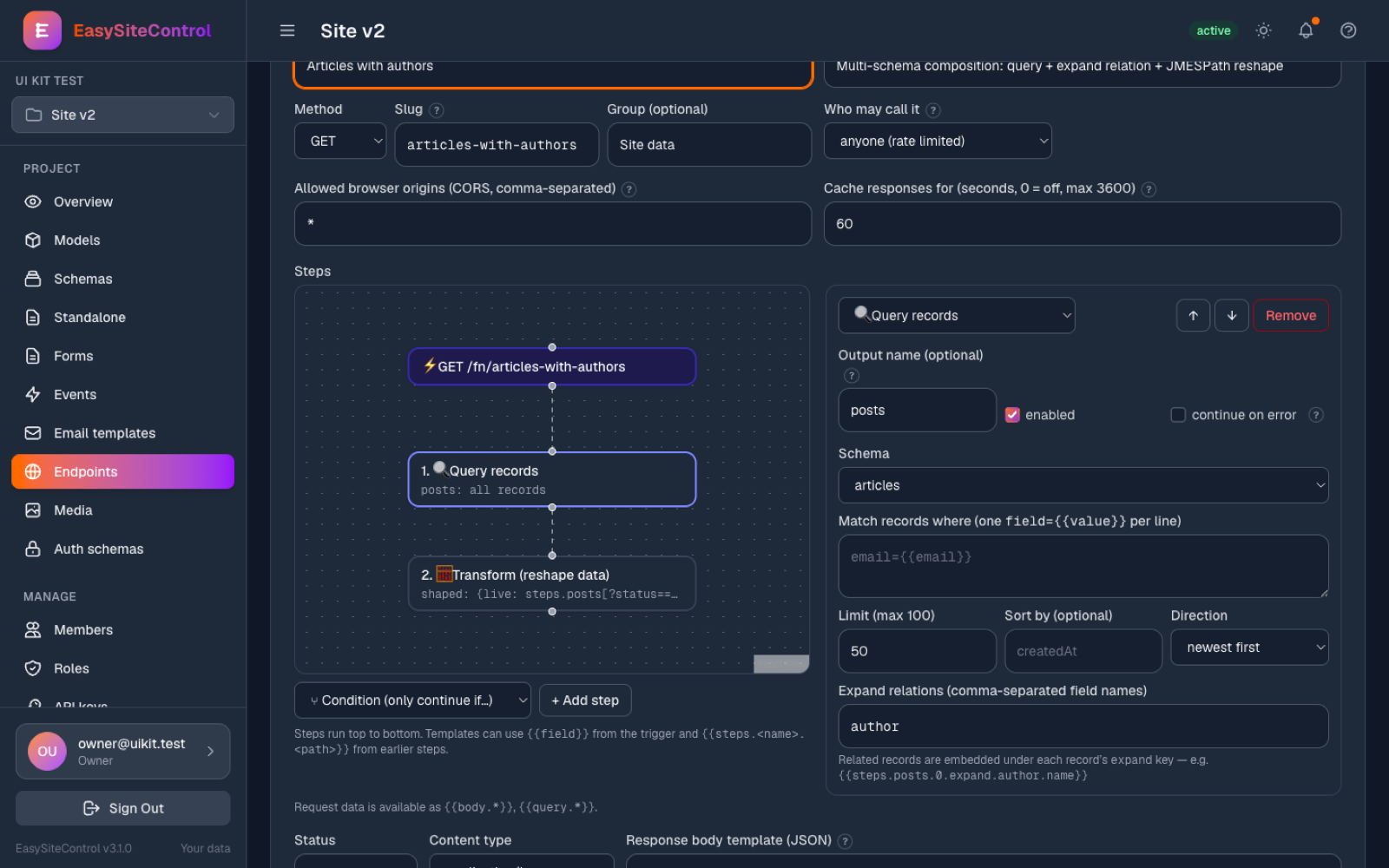
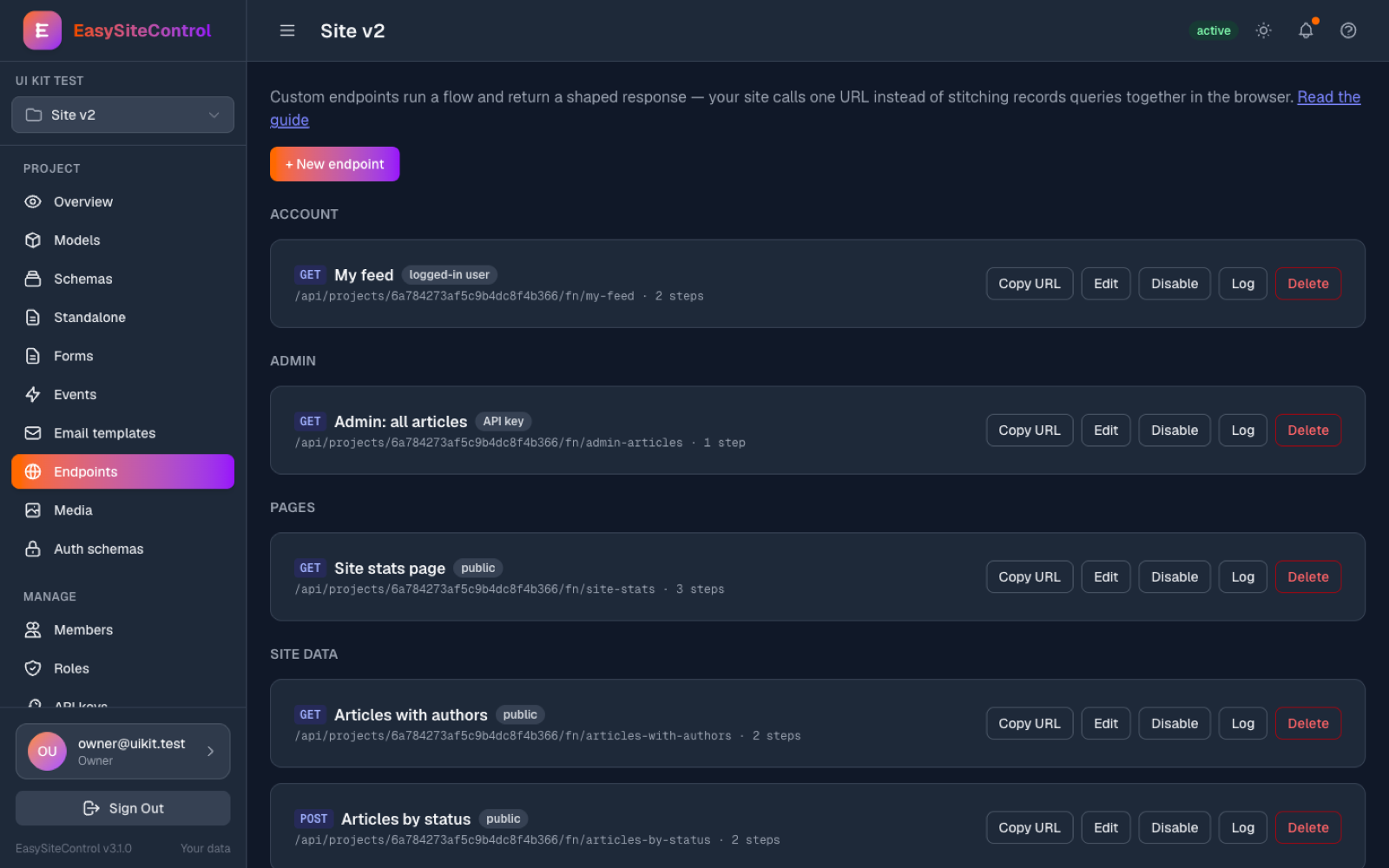
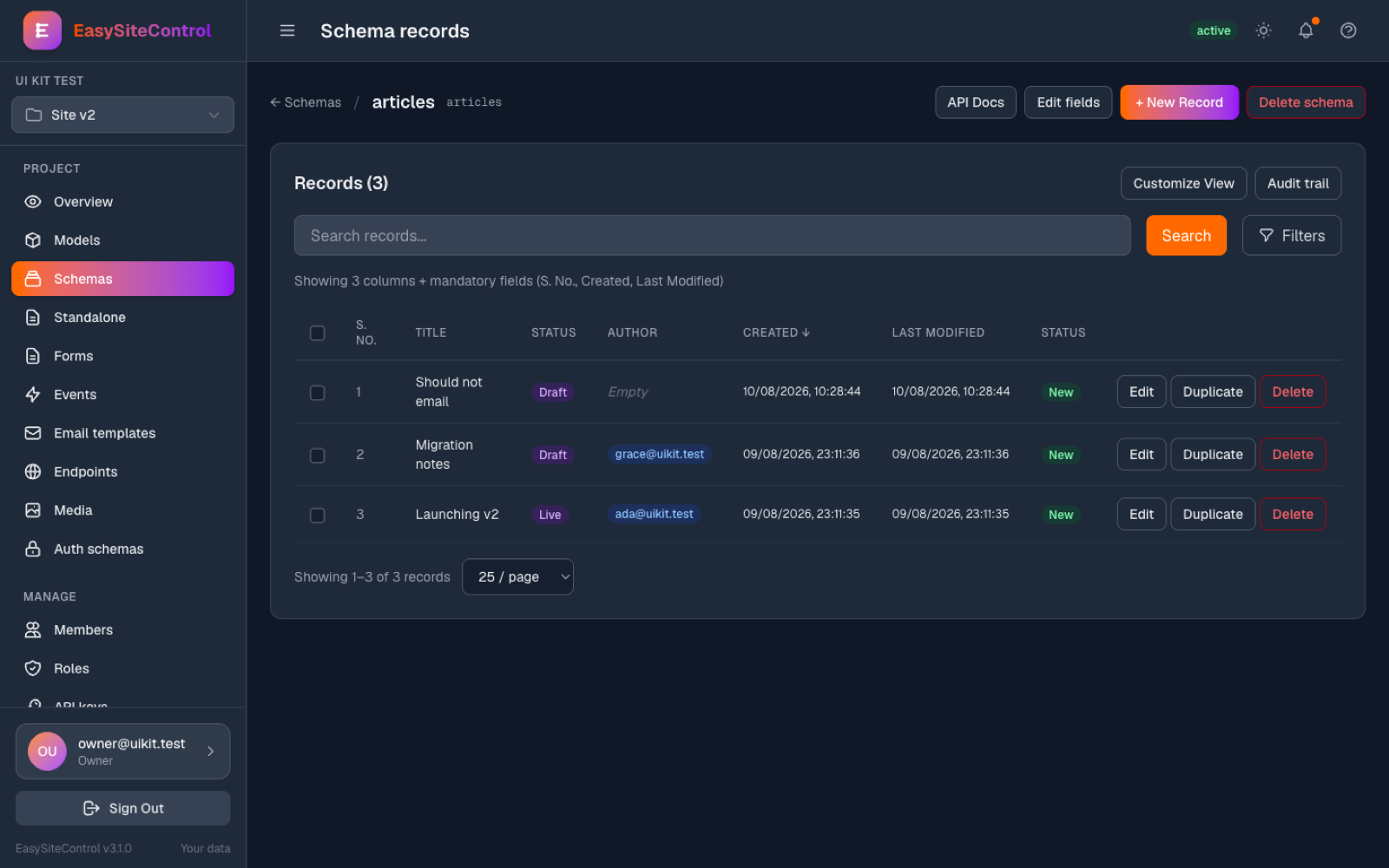
Unedited captures from a live workspace — the same images used across this site. Use them at full size.



Going deeper
The architecture is documented, not just claimed: the product tour shows where everything lives, the docs cover every capability, and the comparison pages say honestly where Strapi, Contentful, Sanity, Payload, Directus, PocketBase or Supabase are the better pick. Questions: contact us.